When you run commercial embroidery machines every day, the quality of your stitch file determines whether your shift runs smoothly or turns into a nightmare of constant thread breaks and machine stops. Many software packages promise instant results with automated conversion tools, but those shortcuts rarely hold up once the needle hits real fabric.
This page breaks down the exact technical differences between automated software and real human digitizing. We look at underlay, pull compensation, density, and editability so you can make an informed choice for your shop, your uniforms, and your promotional orders.
Real Work, Not Stock Photos
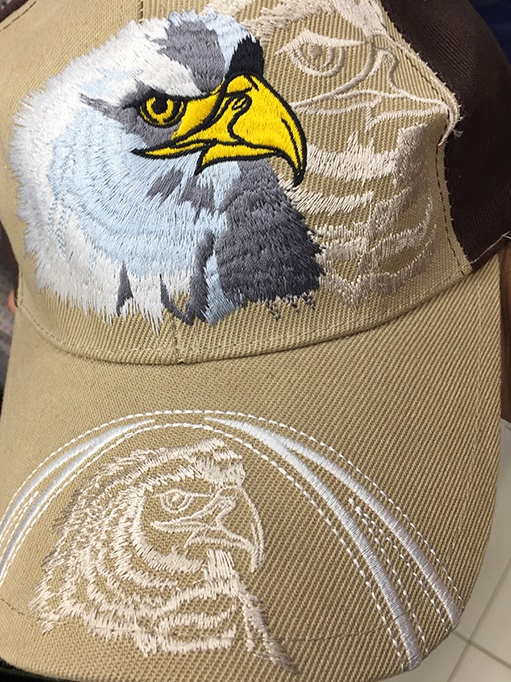
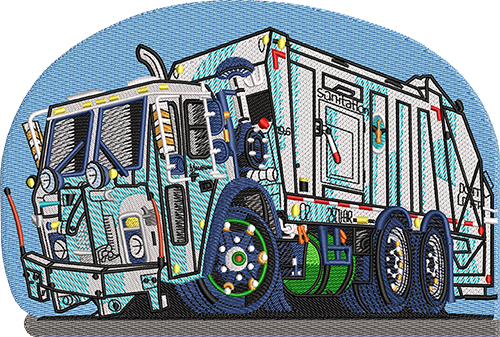
Real digitized logos from real client orders — no stock art, ever.




WHY 360
Files That Stitch Clean — Guaranteed
- Expert digitizers — every file mapped by specialists with real commercial-machine experience
- Quality control at every step — each file is test-checked before it reaches you
- Proof before payment — pay upon satisfaction
- Unlimited free edits until you approve
- 5-year free file backup
- 100% money-back guarantee
Every Format. Every Machine.
One order — delivered in whatever your machines speak.
Tajima • Brother • Barudan • Melco • Janome • Ricoma • Happy • ZSK • SWF — and every machine in between.
Manual Digitizing vs Auto-Digitizing Software
The real comparison, aspect by aspect — not just a claim.
| What Actually Matters | Auto-Digitizing / Auto-Trace | 360 Digitizing — Manual Work |
|---|---|---|
| Underlay Foundation | Applies one generic underlay pattern across the entire design regardless of fabric type, stitch count, or shape density. | Selects specific underlay types like edge walk, zigzag, or fill per individual shape based on the specific fabric and stitch count. |
| Density & Pull Compensation | Uses a fixed density value that fails to account for fabric stretch, which often causes gaps, puckering, or fabric show-through. | Adjusts stitch density and pull compensation per element to match the unique physical behavior of pique, fleece, twill, or leather. |
| Stitch Direction & Sequencing | Follows vector outlines mechanically, creating messy sequencing, erratic angle changes, and an excessive number of jump stitches. | Sets deliberate stitch angles per shape to catch light correctly while minimizing thread breaks, trims, and unnecessary machine jumps. |
| Small Text & Lettering | Traces font outlines as-is without adjustments, which frequently causes small text under 5mm to close up, blob, or become totally illegible. | Rebuilds small lettering with adjusted character spacing and simplified serifs so text stays clean and readable at true embroidery scale. |
| Push-Pull Compensation | Rarely accounts for how fabric pulls inward under needle pressure, resulting in finished shapes that look visibly smaller and distorted. | Oversizes shapes slightly and calculates fabric distortion in advance so final embroidered elements match the original artwork precisely. |
| File Editability | Generates a single dense, locked stitch block that usually requires starting from scratch if you need to change a color or size. | Delivers a fully structured file that can be easily opened and edited element-by-element by another digitizer for future size or color updates. |
| Software Dependency | Relies entirely on algorithms that cannot interpret artistic intent, shading, or the real-world physics of thread interacting with textiles. | Combines human judgment with professional software tools to make smart micro-decisions that software algorithms simply cannot process. |
How Manual Digitizing Actually Works
Customer Uploads Artwork
Submit your vector or raster design files along with your fabric type, target garment, and specific size requirements.
Real Person Builds By Hand
A real human digitizer or vector artist hand-draws and hand-builds your file from scratch without relying on auto-trace software.
Customer Reviews Proof
Examine the digital proof and stitch breakdown to verify all details, colors, and layouts before sending it to the machine.
Production Ready Delivery
Download your clean, production-ready file optimized for zero thread breaks, clean run times, and flawless stitch-outs.
Why Manual Wins
Simple Flat Pricing
Pay just $1 USD per 1,000 stitches with a modest $10 minimum per design and no hidden setup fees.
Unlimited Revisions
Enjoy free unlimited revisions until you are completely satisfied with your file and give final approval.
Always Available
Get expert help and manage your orders anytime with our reliable, responsive 24/7 support team.
Understanding the Mechanics of Underlay
Underlay is the foundation of every successful embroidery design. It tacks the fabric down to the backing and creates a stable base for the top stitches. Automated software applies one generic underlay pattern across the entire design, ignoring whether a shape is narrow, wide, or sitting on stretchy fabric. A manual digitizer evaluates every single element independently. They apply edge walk for borders, zigzag for medium fills, and complex lattice underlays for wide areas. This targeted approach prevents fabric shifting and ensures your design stays crisp.
Density Control and Fabric Physics
Different textiles react uniquely to the downward force of embroidery needles. Pique shirts stretch differently than heavy fleece, twill caps, or smooth leather. Auto-digitizing software uses a rigid, fixed density value across all materials. This lack of adaptability leads to massive problems like thread build-up, fabric puckering, or unsightly gaps where the garment shows through. Real human digitizers manually calculate density and pull compensation based on your specific garment type, ensuring the thread lays flat and looks uniform.
Stitch Direction, Sequencing, and Trim Management
Automated software looks at a vector file and traces outlines mechanically, resulting in chaotic stitch sequencing and excessive jump stitches. This wastes valuable machine time and increases the risk of thread breaks. Manual digitizers plan the exact path of the design. They set deliberate stitch angles that catch the light properly across different sections and sequence the file to travel efficiently from one element to the next. The result is a cleaner stitch-out, fewer thread trims, and faster production runs on your shop floor.
The Challenge of Small Text and Lettering
Embroidery thread has physical thickness, which means small text under roughly 5mm easily becomes illegible if handled incorrectly. Auto-trace software simply copies the font outline as-is. This causes small letters to close up, blob together, and lose their counters entirely. Manual digitizers know how to cheat small lettering. They selectively widen letter spacing, adjust serif shapes, and simplify the character geometry so that text remains sharp, clear, and readable at true production scale.
Who This Page Is For
👋 First-Time Customer
Getting Your First Custom File Built Correctly
If you are new to custom embroidery or vector conversion, you need a partner who ensures your initial orders run smoothly on your equipment. We handle the technical heavy lifting so your first run looks professional without any trial and error.
- Free unlimited revisions until approved means zero risk on your first order.
🛡️ Switching From Auto-Software
Leaving Constant Thread Breaks Behind
If you are tired of birdnesting, needle jams, and distorted text caused by cheap auto-digitizing tools, it is time for a permanent upgrade. Our 100% manual process delivers clean vector conversion and hand-built stitch files that protect your machines.
- Hand-built files eliminate erratic jump stitches and messy density problems.
💬 WE’RE HERE, EVERY STEP
Talk to a Real Human — Right Now
Design consultation, order help, revisions — our support team is on live chat and email 24/7. No bots, no ticket black holes: answers while you’re still thinking about the question.
👑 Our Flagship Platform
OS 360 | Pro
Once your file is done, it doesn’t just land in your inbox — every order here is booked, produced and delivered on OS 360 Pro, the platform that runs our own shop.
- Guided order form — size, fabric and format captured right
- Live production status — no “did you get my file?” emails
- Proofs, revisions and downloads in one dashboard
- ISA, your built-in AI assistant, on call 24/7





Frequently Asked Questions
What is auto-digitizing or auto-trace software?
Auto-digitizing software uses algorithms to scan raster or vector artwork and automatically guess stitch types, angles, and densities without human oversight. While fast, these programs cannot interpret design intent or fabric physics, frequently resulting in poor stitch quality and machine issues.
Why is auto-digitizing cheaper but riskier for embroidery shops?
Automated tools require no labor, so companies can offer them cheaply or bundle them for free. However, the hidden cost falls on your shop floor through constant thread breaks, machine downtime, wasted garments, and frustrated operators dealing with poorly structured files.
When, if ever, is auto-digitizing acceptable to use?
Auto-digitizing is rarely acceptable for commercial production where quality and consistency matter. It might occasionally work for extremely simple, large, single-color block outlines on stable woven fabrics, but it fails on detailed logos, lettering, and stretchy garments.
How can you tell if an embroidery file was auto-generated?
Auto-generated files often feature erratic jump stitches crossing the design, random stitch angles that clash with visual shading, uniform density over varied fabrics, and closed-up small lettering where text has lost its legibility.
What does manual digitizing actually mean in production?
Manual digitizing means a real human professional reviews your artwork, plans the stitch path element by element, sets custom underlays, calculates pull compensation, and hand-draws the vector or stitch points to ensure flawless machine performance.
How does your pricing work for manual digitizing?
Our pricing is straightforward at $1 USD per 1,000 stitches, with a $10 minimum per design. There are no surprise fees, and you always know the exact cost before production begins.
What is your turnaround approach?
We provide fast turnaround times on all orders, with rush options available when you are working against tight deadlines. Every file is carefully crafted by a real person to balance speed with uncompromising quality.
What is your revision and guarantee policy?
We provide unlimited free revisions until you are completely satisfied with the proof and give your final approval. Your satisfaction is fully guaranteed on every single order.
Get It Done Right The First Time
100% manual work, unlimited revisions until you approve, 24/7 support.